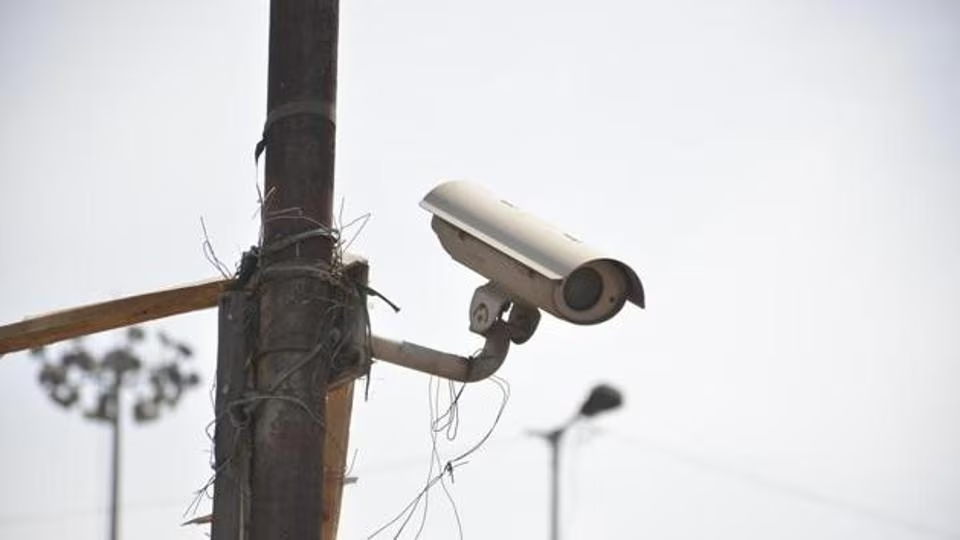
The Odisha state government has surrendered ₹76 crore allocated for the installation and upkeep of the Supreme Court-mandated CCTV surveillance system in police stations. This comes at a time when hundreds of surveillance cameras across police stations and outposts have gone offline, raising serious concerns regarding compliance and real-time monitoring.
1. Massive Camera Outages
Hundreds Offline: According to status reports (including data from maintaining agency Krystal Integrated Services), a total of 823 to 828 CCTV cameras have gone non-functional across police stations and outposts in the state.
Breakdown Breakdown: This includes roughly 795 cameras at police stations and 33 at police outposts turning offline.
2. Violation of Supreme Court Directives
Mandatory Surveillance: Per Supreme Court directives, all CCTV cameras installed within police stations and outposts are required to remain fully functional at all times to prevent custodial abuse and ensure transparency.
Judicial Scrutiny: The Orissa High Court had previously expressed deep concern over defunct or missing cameras following high-profile incidents of alleged custodial abuse and harassment at police stations (such as the Bharatpur police station case in 2024).
3. Financial Lapses & Budget Surrender
Surrendered Funds: A budgetary allocation of ₹76 crore meant for the CCTV Surveillance System during the 2025–26 financial year was surrendered.
Call for Supplementary Funds: Following the widespread outages, the Odisha police have sought the immediate re-allocation and release of funds through a supplementary budget to pay the Odisha Computer Application Centre (OCAC) for urgent restoration and continuous maintenance.
4. Impact on Real-Time Monitoring
VMS Disruption: The failure of these cameras severely compromises the Video Management System (VMS), which is integrated directly with the central command setup at the State police headquarters, undermining effective real-time tracking.